
– With Freddie Mercury and Queen –
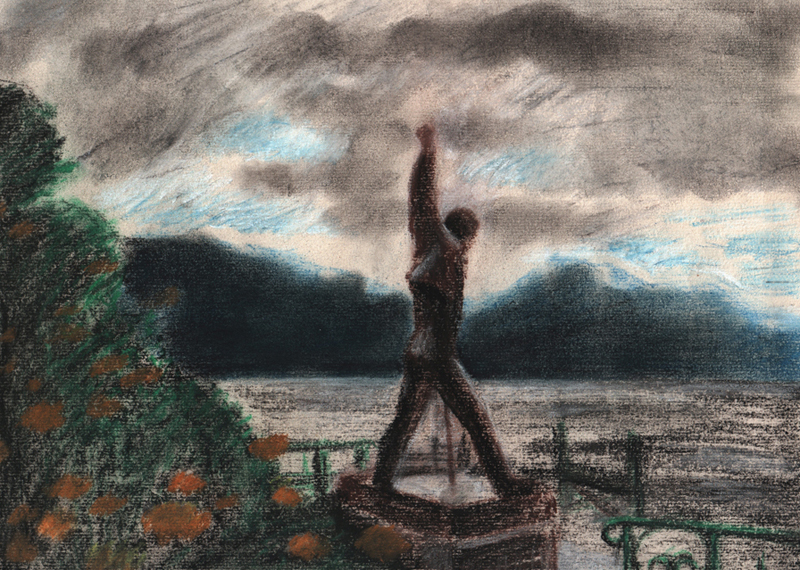

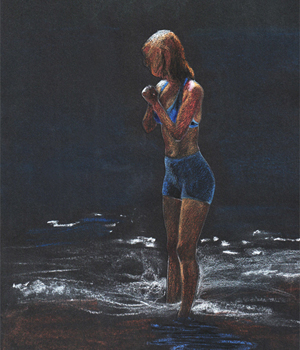
Back in 1998, a friend from high school reintroduced me to the music of Queen, igniting a profound fascination with their history. I found myself yearning to understand the powerful connection I felt to them, even years after the passing of their iconic frontman, Freddie Mercury. I remember the exhilarating moment of running into a sunlit glade after emerging from a dark forest in the Bucegi Mountains (the legendary Cradle of the Gods), the sound of Ogre Battle filling my ears. Later, as I tried to envision the person to whom many of the songs seemed directed, I pictured a blond figure with a 1970s hairstyle, complete with bangs. This visualisation was influenced by a recent viewing of Velvet Goldmine (1998) at the French Library’s alternative cinema in Bucharest, leading me to imagine this person as a writer or investigative journalist who had experienced that era firsthand. I longed to know whether the glam-rock ’70s had truly existed or if it was all just a fantasy. I found myself grappling with the allure of that time: the fashion, the hairstyles, the androgyny, despite feeling like the antithesis of its spirit. While I’ve always embraced androgyny, being closeted about my asexuality made attending those culturally bold events somewhat awkward. Driven by a desire to ‘learn the secret’ of sexual liberation, I came to understand that many, including Freddie, felt far from liberated, instead navigating complicated histories filled with childhood trauma and coping through raucous celebrations. Ultimately, the trauma was not the cause of who they were, but rather a reflection of their journey, intertwined with their true selves.
Why do I say ‘reintroduced me’? Because Queen’s music already held a special place in my heart, having first encountered it in the film Highlander (1986), which I watched in 1990 on a bootleg tape rented from a typical post-1989 Mom-and-Pop store located just downstairs from my apartment. The film was about a secretive group known as the Immortals, whose lives and mysteries continued through the ages until their collective knowledge would be passed down to one victorious challenger. Interestingly, the lineage I come from has historical ties to the ‘Immortals of Zamolxis’, a tribe from the ancient territories of Romania and Ukraine, more commonly known as the Getae. Zamolxis is a figure associated with thunder and lightning, precisely like the knowledge of the Immortals’ fictional counterpart.
The film’s visuals continually reference the 1982 publication The Holy Blood and the Holy Grail by Michael Baigent, Richard Leigh and Henry Lincoln, “which proceeds by innuendo, not by refutable scholarly debate” (Richard Barber). While this book is frequently cited as the direct inspiration for similar projects like The Da Vinci Code, my own reading revealed implications that were surprisingly different. For instance, the legendary Grail does not refer to the womb of Mary Magdalene at all in the text. Instead, the Grail is depicted as a ceremonial wine cup passed from master to disciple, an intimate act that symbolises the disciple becoming ‘One’ with his master – quite reminiscent of the narrative in Highlander. More of my research on this topic can be found in my Highlander Fashion Project: The Prize, Explained.
But it was in 1992, after the Freddie Mercury Tribute Concert aired on TV, that I genuinely sensed something larger than life was guiding the band’s history. As a kid I was always setting intentions, so in that moment, as the credits began to roll, I vowed to revisit this story a few years later, hoping to gain a better understanding of it from an adult perspective.
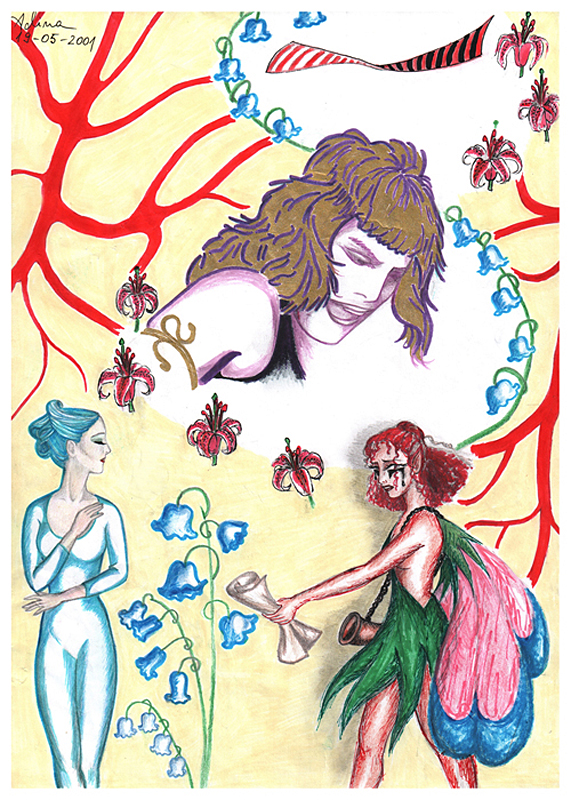
So between 1998 and 2000 I spent my time being astonished by this ability to manifest my forgotten intentions and trying to connect with like-minded Queen followers in my city. This was before any of us had internet access, making the search feel drawn out and frustrating (we placed ads seeking penpals in pop-culture magazines!). Many of the individuals I encountered were queer and still in the closet, navigating a culture steeped in religious beliefs, and I struggled to find the words to understand my feelings. To cope, I began drawing illustrations of Queen songs and wrote short essays on what I thought the meaning was, in the same way that I approached Romanian poetry for my studies. In doing so, I discovered numerous parallels between Romanian literature and Queen’s music, which also helped me excel academically. But I always remained an outsider, even within those passionate fandom circles.
Alongside that exploration, I had begun reading The Lord of the Rings, and I found myself intrigued by the interminable parallels with Queen, which I was not alone in noticing. The first element was the timeless theme of a male brotherhood embarking on an adventure, which is the foundation of many epic tales. However, I was never quite sure who Sam was, as it seemed that each individual apart from Freddie embodied various aspects of Sam at different times (a phenomenon I came to refer to as ‘splintering’). At the time, I decided to put that question aside, but since we are delving into the music, I feel compelled to share a non-linear leap to my discovery in 2006 of the original manuscript notes published by J. R. R. Tolkien’s son Christopher in The History of Middle-Earth series, specifically in 1992 regarding the temptation at Mount Doom which turns out to have been entirely musical in nature:
“So basically, in those versions Frodo’s thoughts are related to becoming a Faerian king; a king of kings, but one primarily interested in parties, feasts and bardic activities – a classic element of Fairy-Stories, which Tolkien already used e.g. with the Elvenking’s feasts in The Hobbit. This idea fits in my opinion quite well the Faerian, spiritual ennoblement, Elf-friend part of Frodo’s arc.”
(Wanderer_Falki on Reddit)
There is also another element that resonates with me, which I have previously hinted at. It shows how it is indeed friendship and brotherhood that are being promoted through the bardic activities depicted in the future: “Hobbits would rule (of course he would not let down his friends); Hobbits should become lords of Men.” However, if we fail to grasp the significance of the admiration being offered to these friends, we risk misinterpreting everything about their evolution together as some kind of negative ‘pact’. The realisation of the opposite finally came to light with the film Bohemian Rhapsody (2018), where actor Rami Malek delves into Freddie Mercury’s profound awareness of his role in the captivating allure of Queen as a band. What Freddie wanted to express, the film tells us, was that his grand vision of his friends was deeply intertwined with his queer identity, which he then projected onto the world around him. He recognised that without him, their impressive achievements, brilliant as they were from an intellectual standpoint, might have lingered in the ordinary realm, lacking that enchanting Faerian essence he infused into their lives. This sentiment is made even more touching by the discovery of Freddie’s drawings and illustrations of the band, depicted as a noble, knightly brotherhood. In other words, this was how he really felt about them – an insight which I can then apply to the original, long-standing spiritual tradition of the Magi or wizards who create kings, that is misunderstood as a ‘temptation’: the White Goddess.
The internet was finally introduced to me through Brian May’s Another World album (1998), where I discovered the link to his website hidden within the booklet. When I bought the cassette version in 2000 from that large music store I used to visit almost daily after school, it felt like an awakening. Every element, from the cover design to the photos, leapt at me as profoundly significant, like whispers from the past. These whispers were, of course, the references to Tenerife and the Canary Islands as a believed location of Atlantis, which I will explore further in my separate Another World series. Thus, it was Brian’s Another World which led me back to my original visualisation of an ‘investigative journalist’ with a ’70s hairstyle. It was time, I thought, to find out more about who was at the root of my enchantment with Freddie himself.

